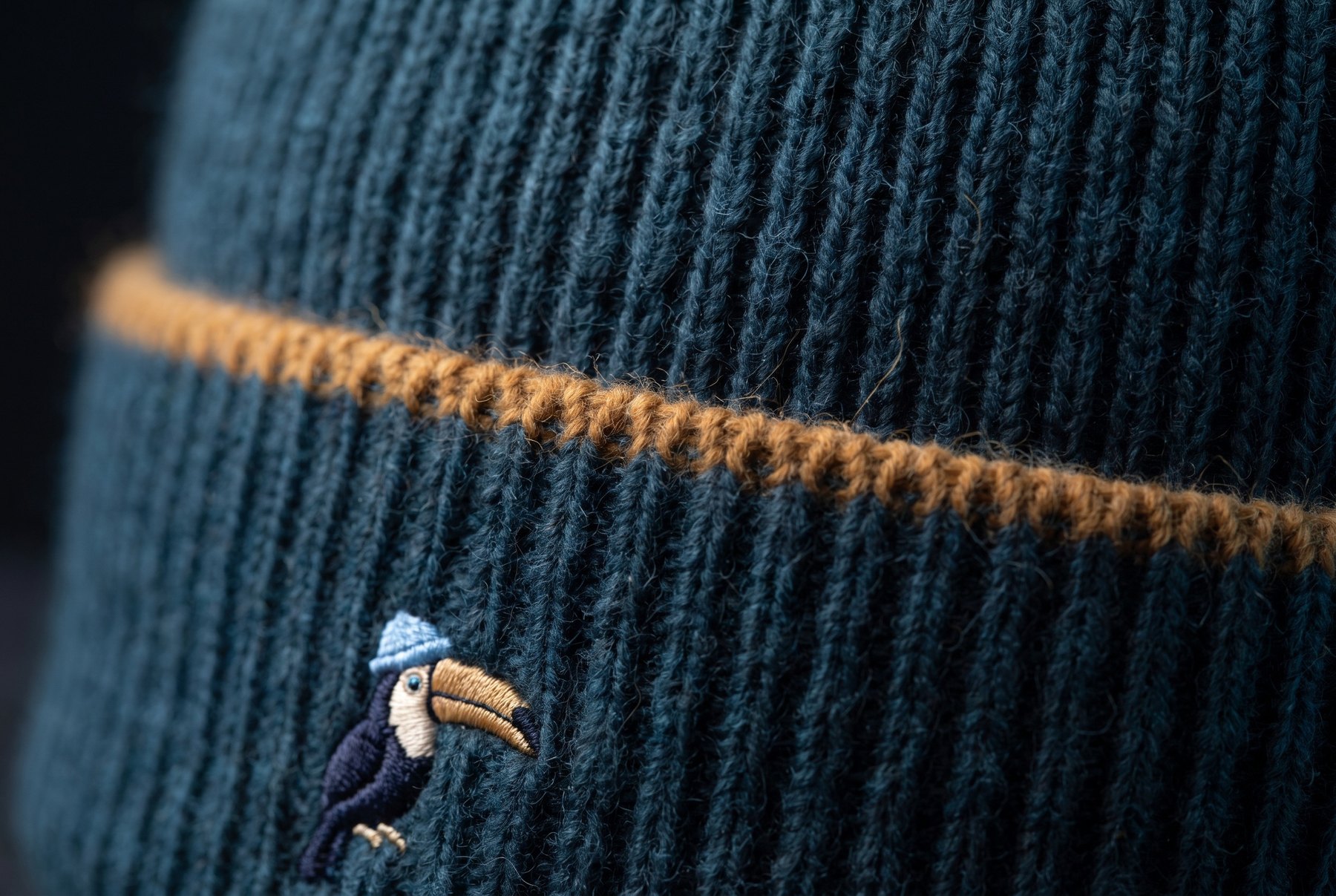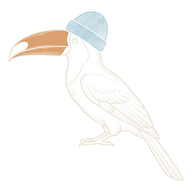
The Watch: a knitted cashmere hat in deep petrol with one fine ochre line at the fold of the cuff and a small embroidered toucan, standing on dark slate.

A Canadian luxury knit house

The WatchPure cashmere, Petrol
The Edge in Ochre

A tropical bird chose a Canadian winter.

TuqueOn is the house of the bird that stayed, and dressed for it.
The bird that stayed
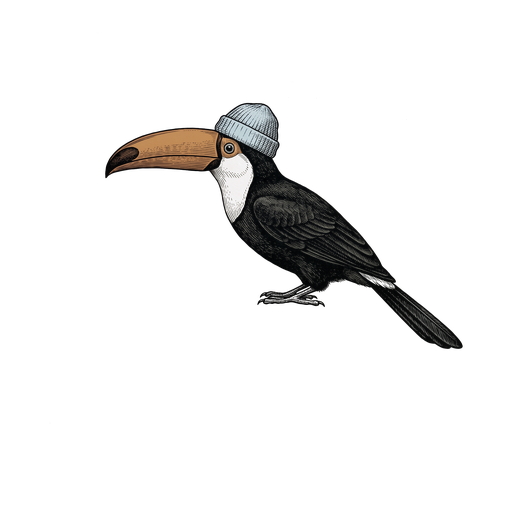
The TuqueOn bird: an engraved toucan in a small knitted cap.

The toucan is the most extravagant bird most people can name, and it has no business in February.

One stayed, and dressed for it. That contradiction is the whole house: joy in cold, elegance with a dry wit.

We make a small number of hats each winter, knitted from cashmere, alpaca and extra-fine merino by mills that have done nothing else for generations. The hat is the product, not an accessory to a parka.

Made for adults: the hat you reach for at fifty, and the one you give to the person who has everything else.
From the high places.

Alpaca from the altiplano, cashmere from the steppe, spun and dyed in the Biellese Alps, knitted in Canada. Where it comes from, and what we do with it.

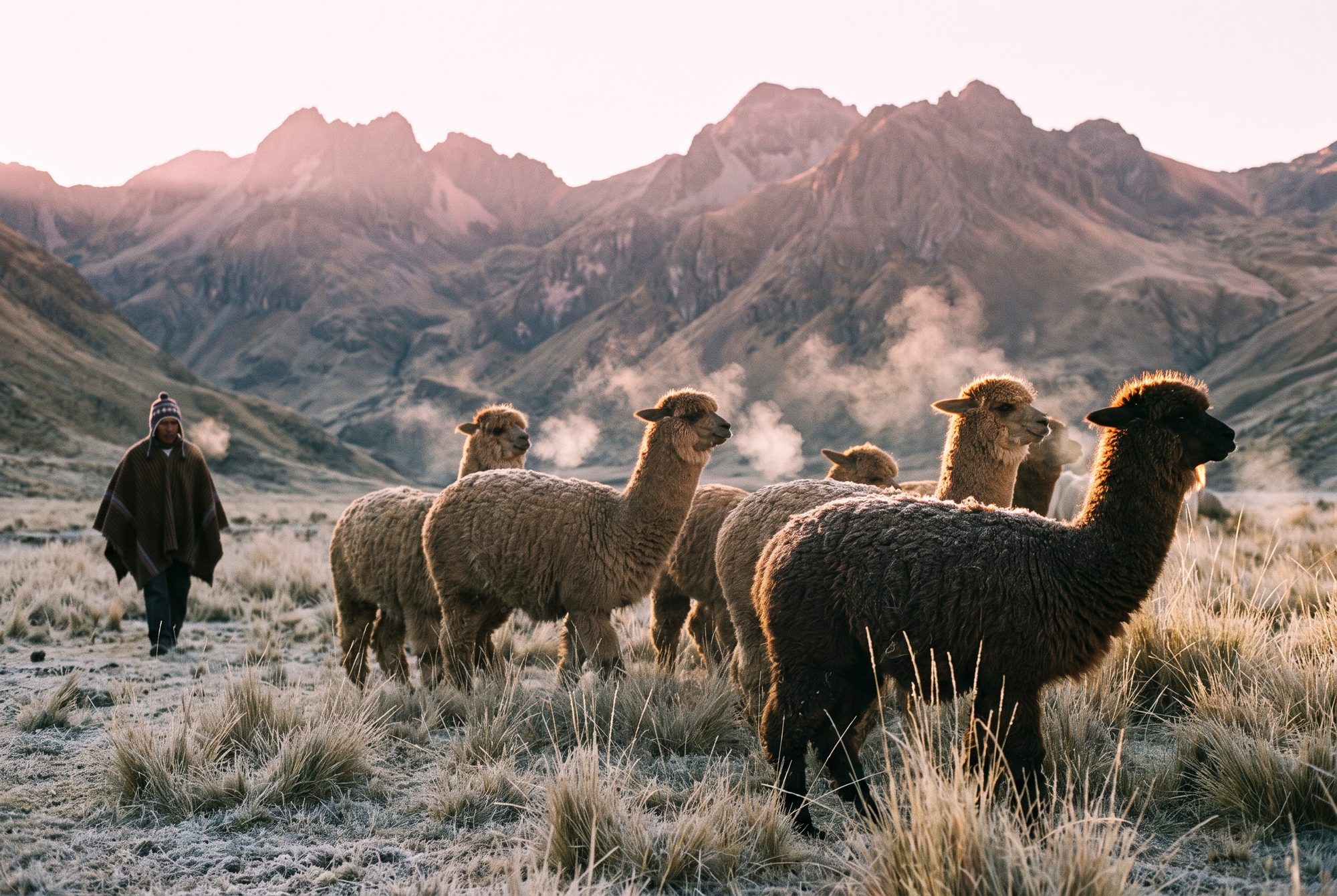
A small herd of alpacas on the frosted Peruvian altiplano at first light, a herder walking at the left, pink peaks behind.
IAltiplano, PeruHuacaya alpaca graze above four thousand metres. The cold is what makes the fibre fine. One shearing a year, in the southern spring.
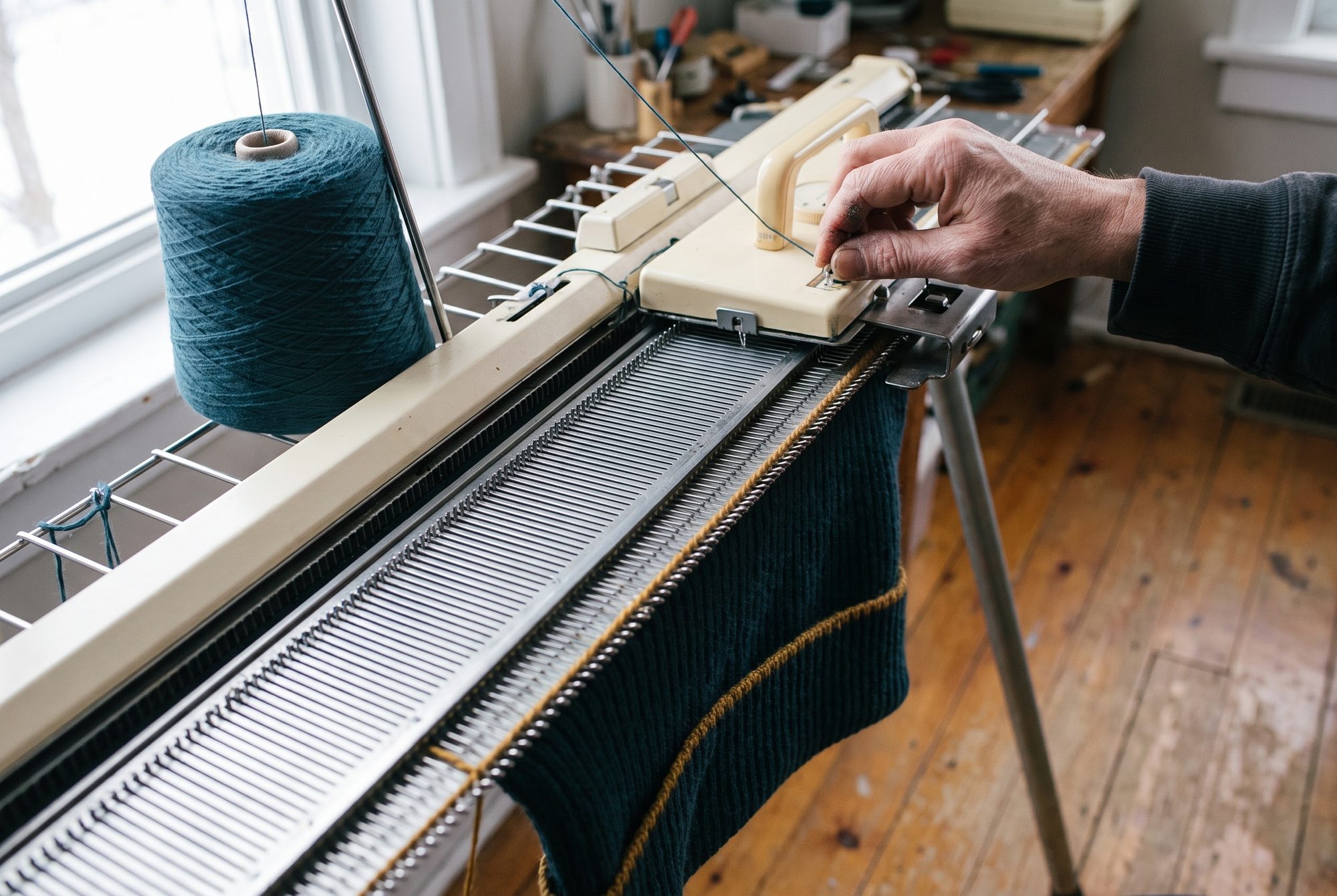
The needle bed of a flat-bed knitting machine knitting petrol rib with one ochre line, a cone of yarn beside, grey winter light.
IIThe knitting room, CanadaThe rib is knitted flat on a slow machine, the Edge laid in as a single row of ochre exactly where the cuff will fold.
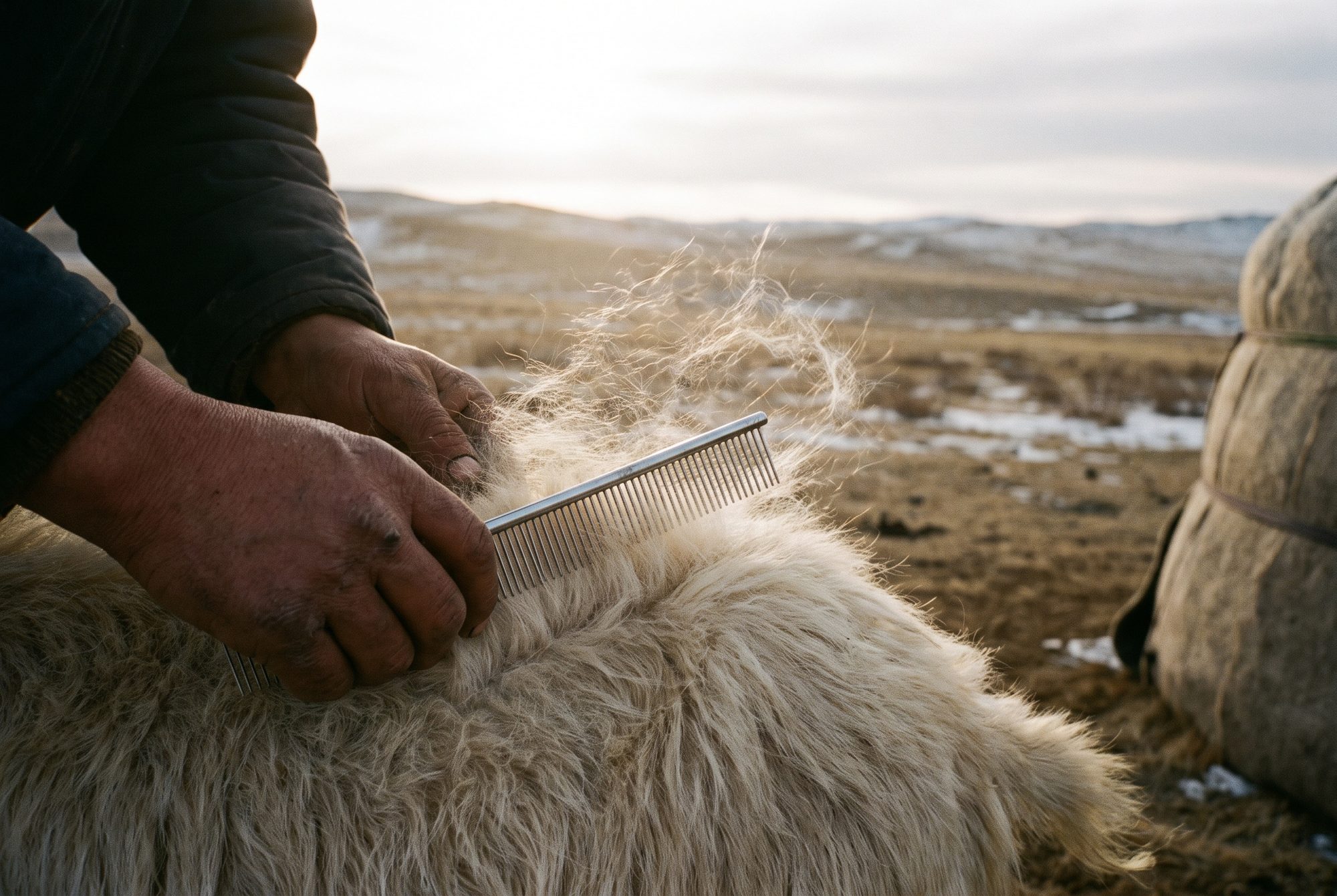
A herder's hands combing the fine white underdown from a cashmere goat on the Mongolian steppe, low sun through the fibre.
IIISteppe, MongoliaCashmere is not shorn. It is combed by hand from the goat's underdown as winter ends, a few hundred grams from each animal.
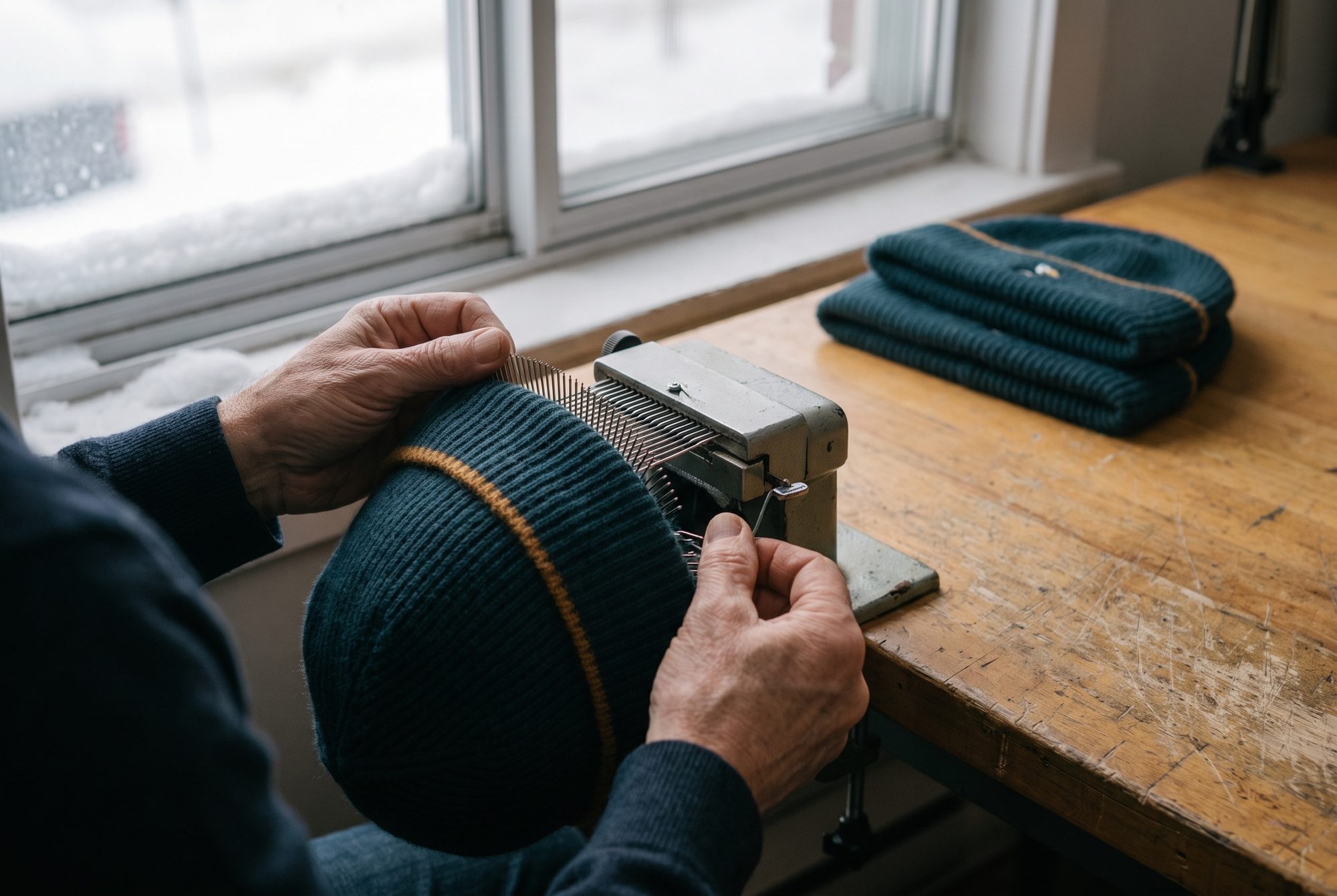
A knitter's hands finishing the crown of a petrol hat on a linking machine beside a frosted window, two finished hats folded on the bench.
IVThe linking bench, CanadaThe crown is closed by hand on a linking machine, stitch by stitch, so there is no seam to feel.
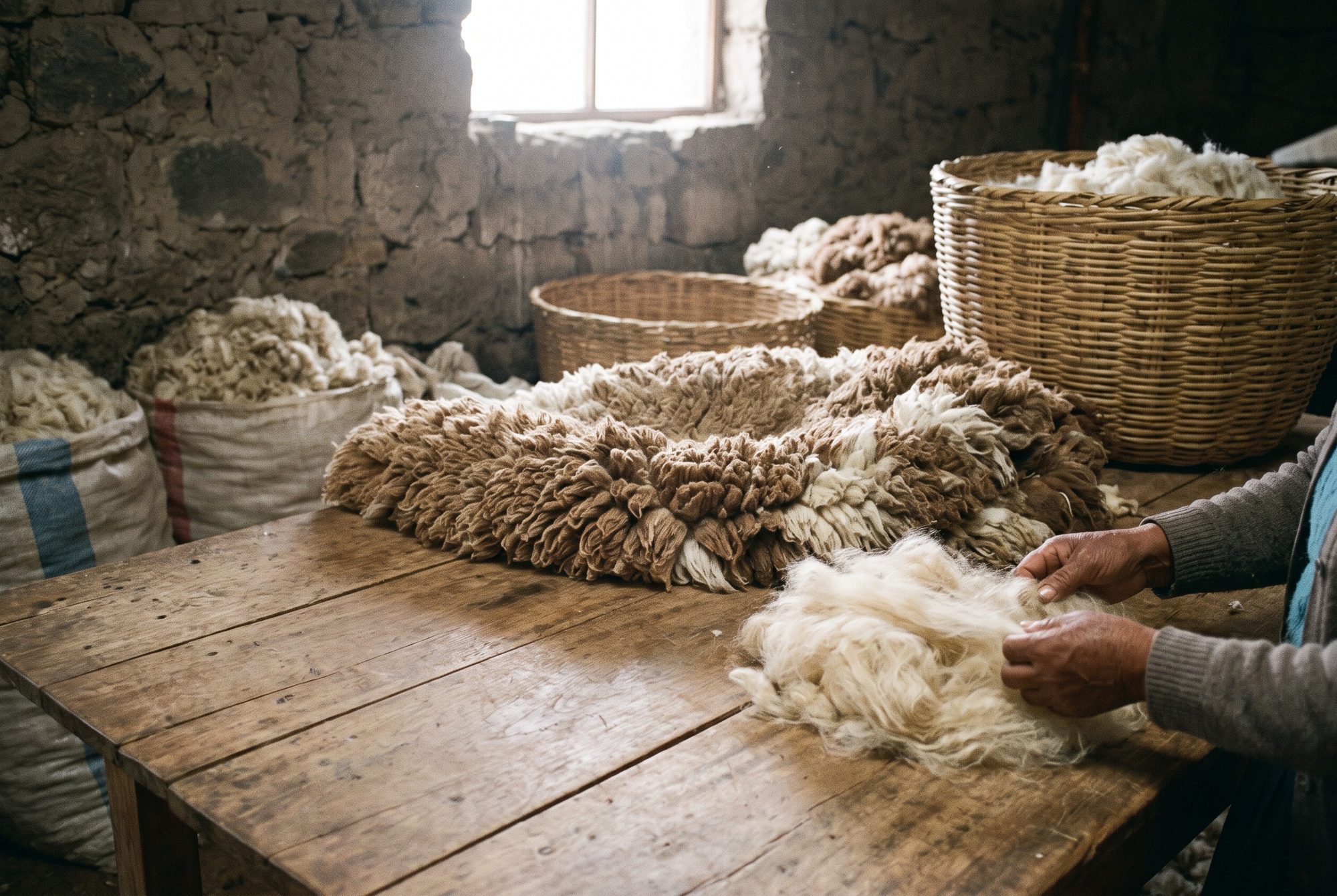
A whole alpaca fleece spread on a wooden table in a stone shed, two pairs of hands sorting it by fineness in high window light.
VArequipa, PeruEach fleece is opened on the table and graded by hand. The softest, from the youngest animals, is set aside. That pile is ours.
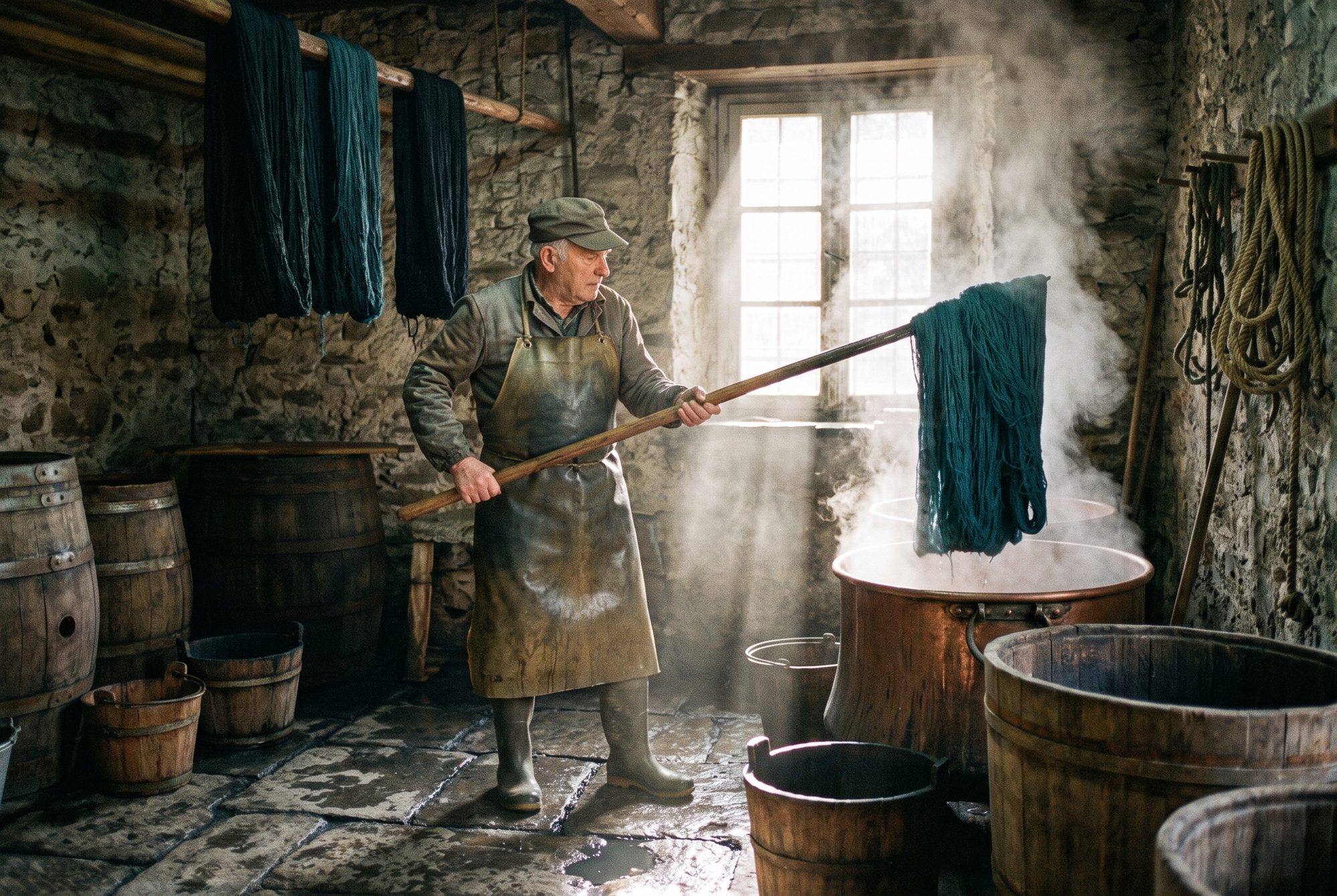
A dyer lifting a dripping hank of petrol-coloured yarn from a steaming copper vat on a long pole, steam in the window light.
VIThe dye house, BiellaPetrol is not a colour you buy off a card. It is dyed in the hank, in small lots, and matched by eye to last winter's.
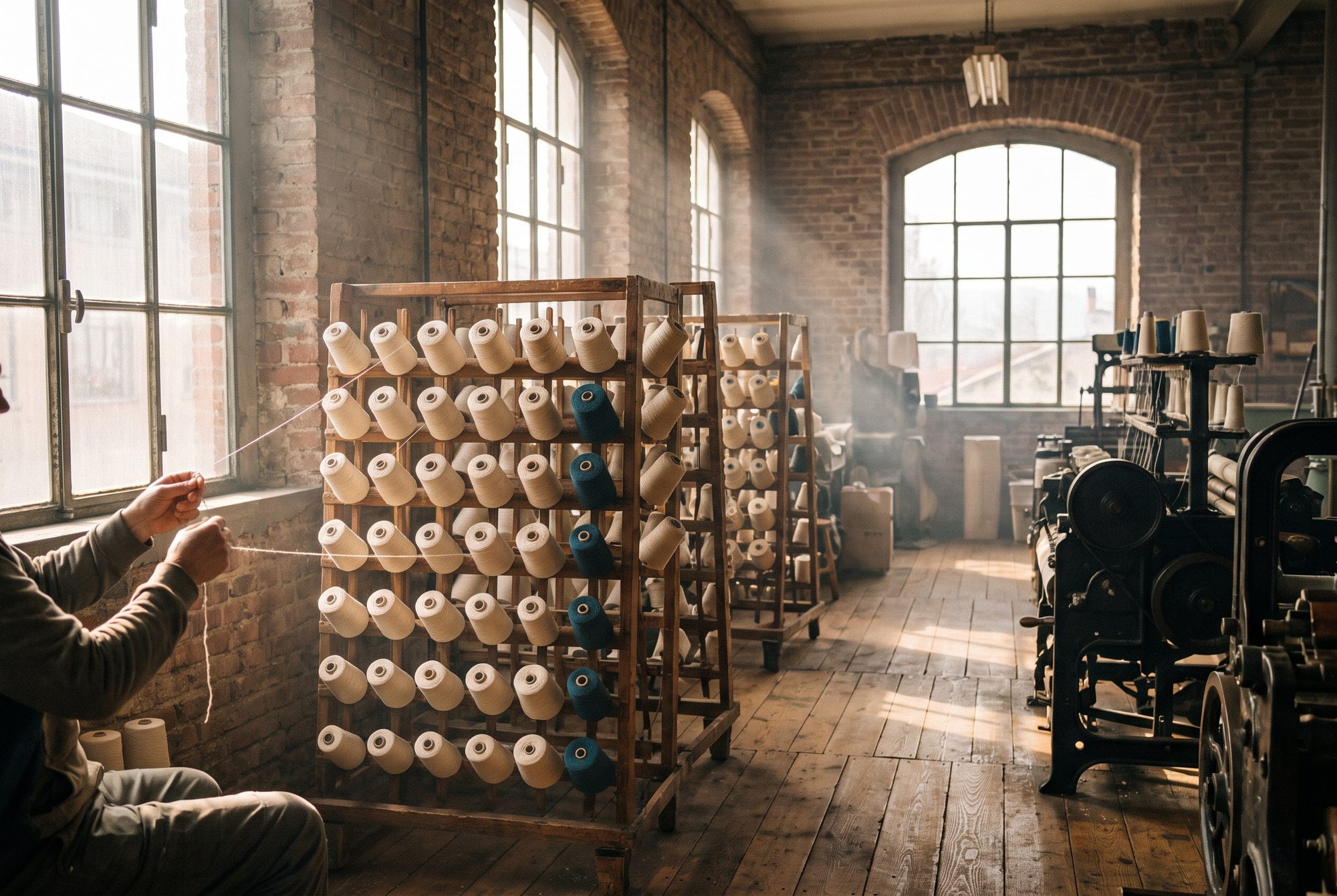
Inside an old spinning mill: a wooden creel of yarn cones in bone and petrol, a technician checking a strand against tall windows.
VIIBiella, ItalySpun two-ply in a family mill where the water is soft and every cone is still checked by hand against the window.
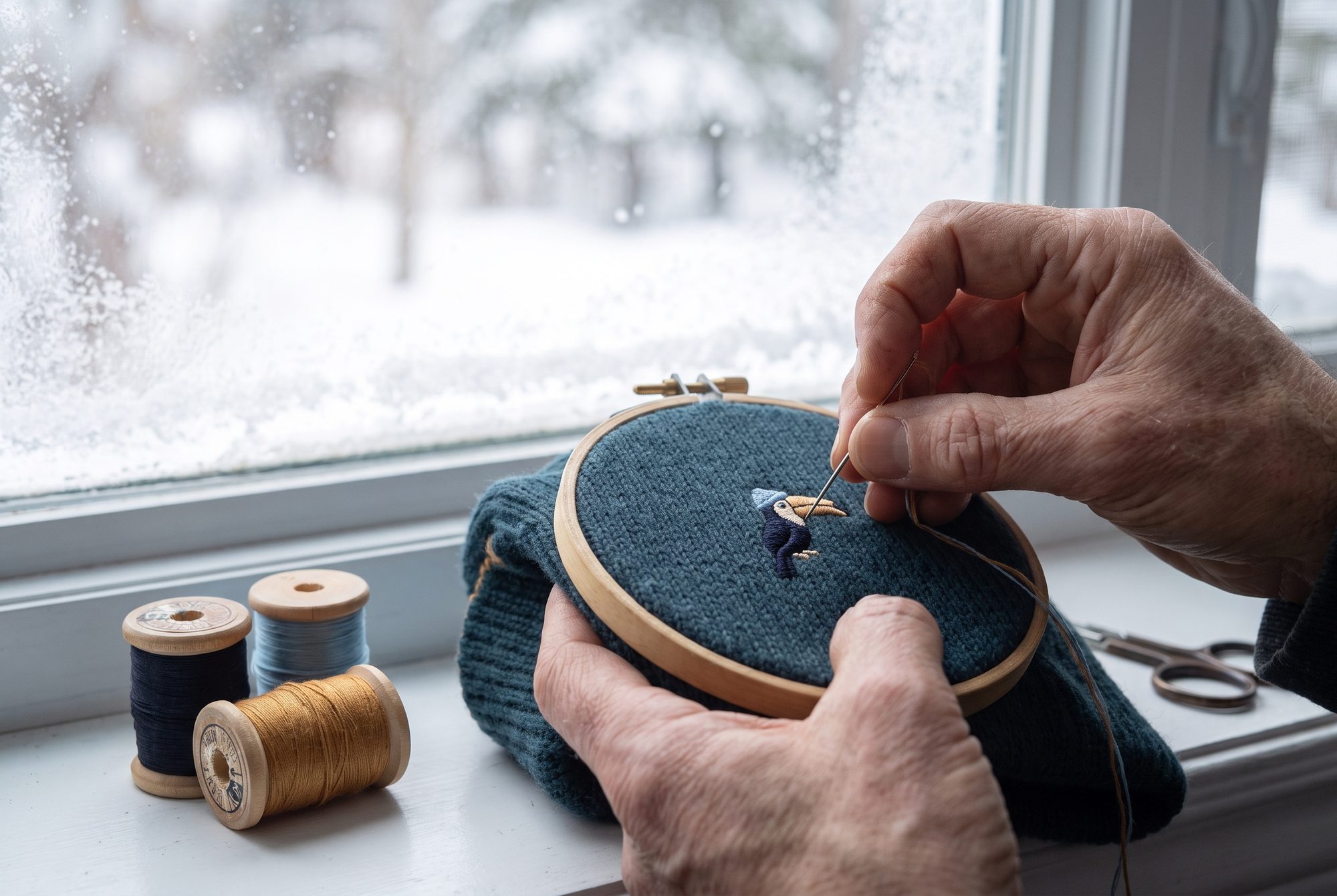
An embroiderer's hands at a small frame stitching the tiny toucan onto a flat petrol cuff panel, spools of ink, ochre and ice-blue thread beside.
VIIIThe last stitchThe bird goes on last, by hand, on the flat panel before linking. One bird, the same on every hat, twenty-four millimetres.

The Watch.

One hat, held all the way through. A compact watch cap with a substantial double-folded cuff, shown in Petrol with the Edge in Ochre.

Close view of the Watch: the rib of petrol cashmere, the single ochre line at the fold of the cuff, and the small embroidered toucan in its ice-blue cap.

The Edge

One fine line of colour exactly where the cuff folds. Visible at arm's length, the first thing a stranger notices across a room. Every hat has it.

The Rhythm

Three wide ribs, one narrow, repeating. A texture the hand remembers, and a pattern no other house knits.

The Crown

A four-point decrease that follows the head. No point, no slouch, nothing spare. The view everyone has of a seated person.

The Bird

Twenty-four millimetres, front left of the cuff, in satin stitch. Ink body, ochre beak, an ice-blue cap of its own. The same bird on every hat, once. Close enough to be missed, which is the point.

Pure cashmere, two-ply·Double-folded cuff·The bird, 24 mm, front left·Repaired for life

Opened slowly.

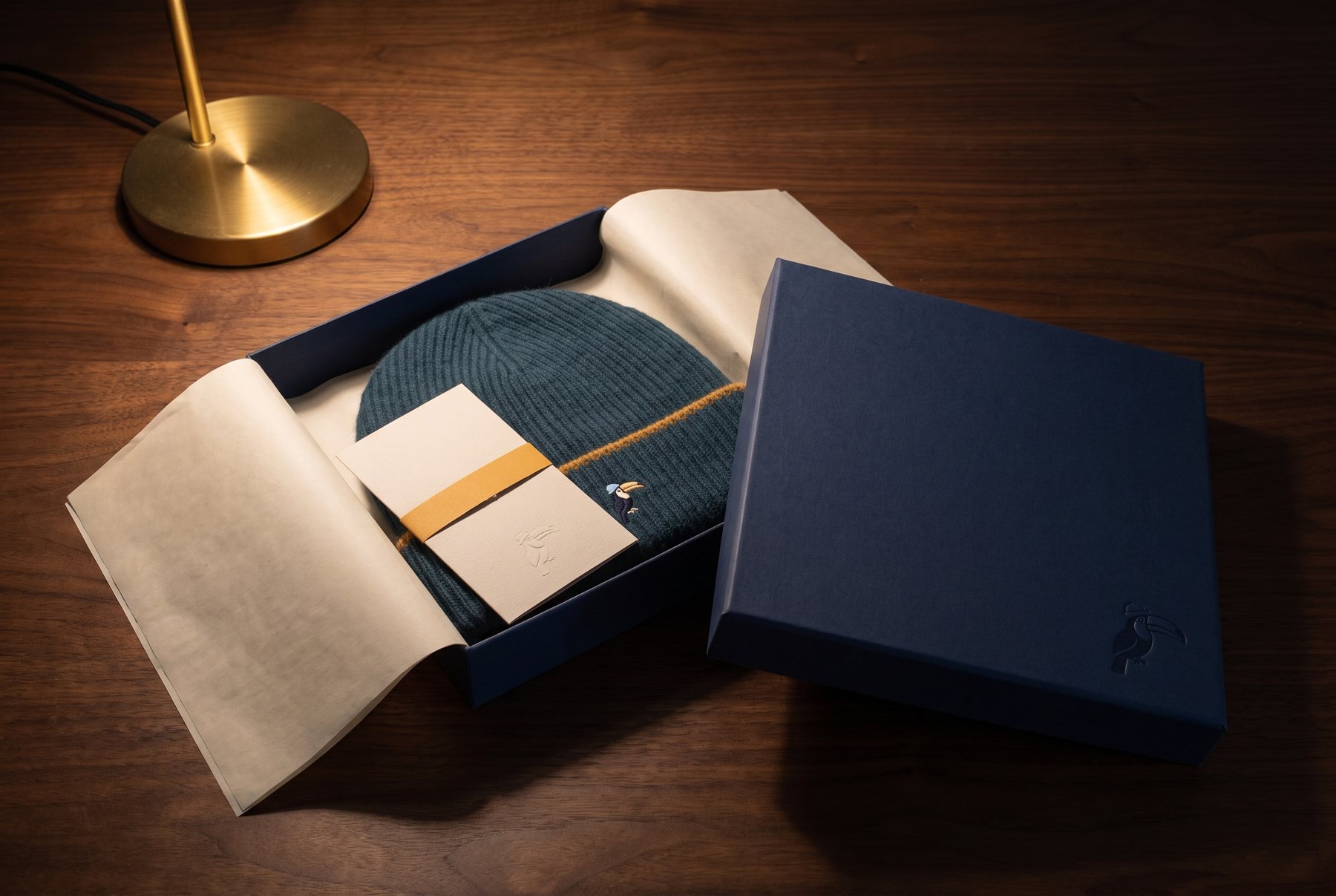
The box is night blue, the tissue is bone, the card is signed by the knitter who finished the hat. Numbered pieces carry the number and the winter inside, where only the owner sees them.

A night-blue rigid box open on a walnut table under a brass lamp: bone tissue folded back from a petrol hat, a bone card with an ochre band, the bird blind-embossed on the lid.
The boxRigid, paper-wrapped, the bird blind-embossed at one corner of the lid. Nothing printed on the outside. Inside, bone tissue and a card signed by hand.
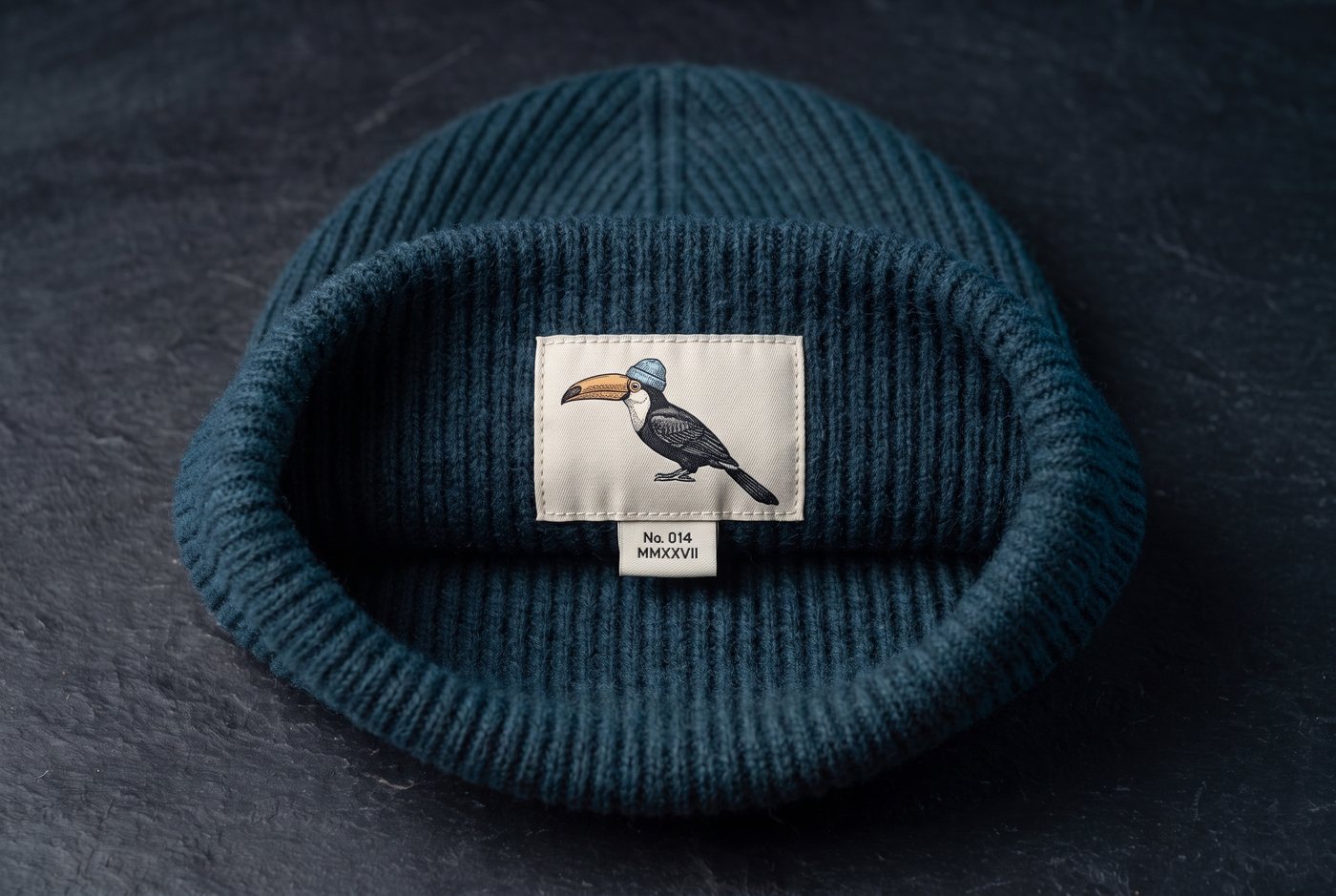
Looking down into the open hat: a small woven label with the toucan sewn flat inside the back of the cuff, and a tiny tag reading No. 014, MMXXVII.
The numberInside, at the back of the cuff where it cannot touch you, a small woven label sewn flat: the bird, and a tag with the piece number and the winter it was made. No. 014, MMXXVII.
An older craftsman's hands re-stitching the small toucan on the cuff of a worn petrol hat under a brass lamp, reading glasses and small scissors on the bench.

Our promise

Repaired for life.

Every hat we make can come home. A caught thread, a thinned cuff, a hole from a winter well spent: send it back and the knitters mend it with the same yarn, for as long as it is yours. The number inside never changes.

We release the way birds appear.

A few at a time, in season, and not again. One winter runs like this.

  1. October

    Migration

    The Permanent Collection returns: the Watch in four colours, the Drift in two. The same hats every winter, made the same way.

  2. November

    Sighting No. 01

    A numbered release in a colour and a yarn you will not see again. Announced to the Flock ten days ahead with one photograph; the Flock has the first 48 hours. The number is stitched inside before it ships.

  3. January

    Sighting No. 02

    A different hat. Every Sighting is logged like a rare bird: date, place, number seen.

  4. All winter

    Rare Birds

    Made to order, a few weeks each. The Watch in pure cashmere, the Pair for two, your initials inside the cuff where only you know.

Sightings

Seen once.

Studies for the first winter. A Sighting is a colour, a yarn and a number of pieces. When the pieces are gone, the colour retires.

Two figures on a snowy village street, softened past recognition: the two Sightings of the first winter, not yet shown.

Seen first by the Flock

Both Sightings of the first winter are photographed. The Flock sees them ten days before anyone else.

Join the Flock

WhistlerThe two Sightings of the first winter, worn on the Village Stroll. Shown to the Flock.

Rare Birds

Made for one person, or two.

Rare Birds are made to order, one at a time, and none is a plain hat: a colour the Permanent Collection does not carry, a detachable cashmere pom, a lining of brushed cashmere in the house petrol against the forehead and ears, your initials on the tag inside. Each arrives in a case of Canadian black walnut, lined in bone cashmere felt, meant to outlast the winter and most of the ones after it.

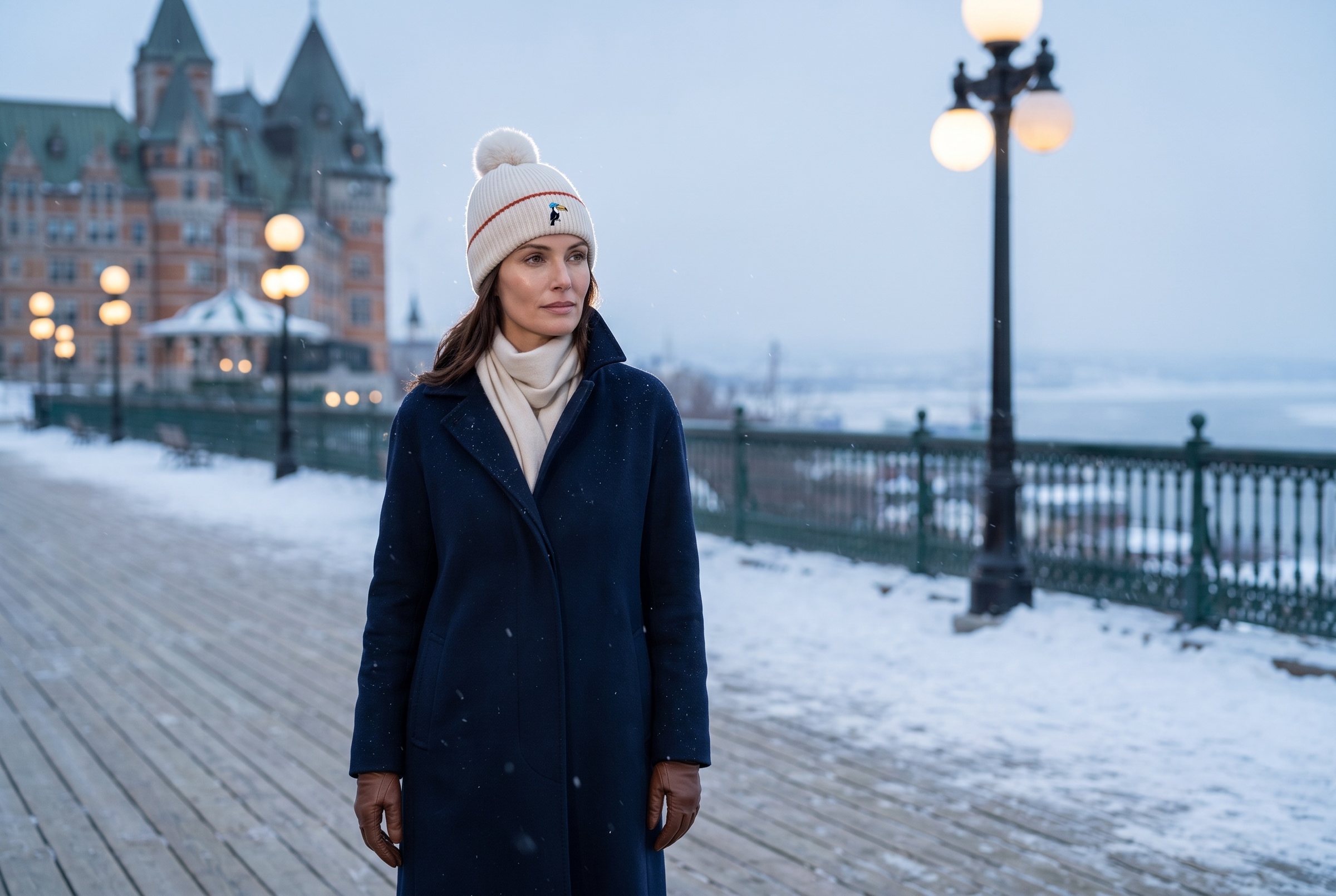
A woman in a navy coat and cream scarf standing on the snowy Dufferin Terrace in Quebec City at blue hour, looking out toward the river, the Chateau Frontenac behind her, wearing the chalk Rare Bird with its pom.
Quebec CityThe Rare Bird in Chalk on the Dufferin Terrace, out in the weather it was made for.
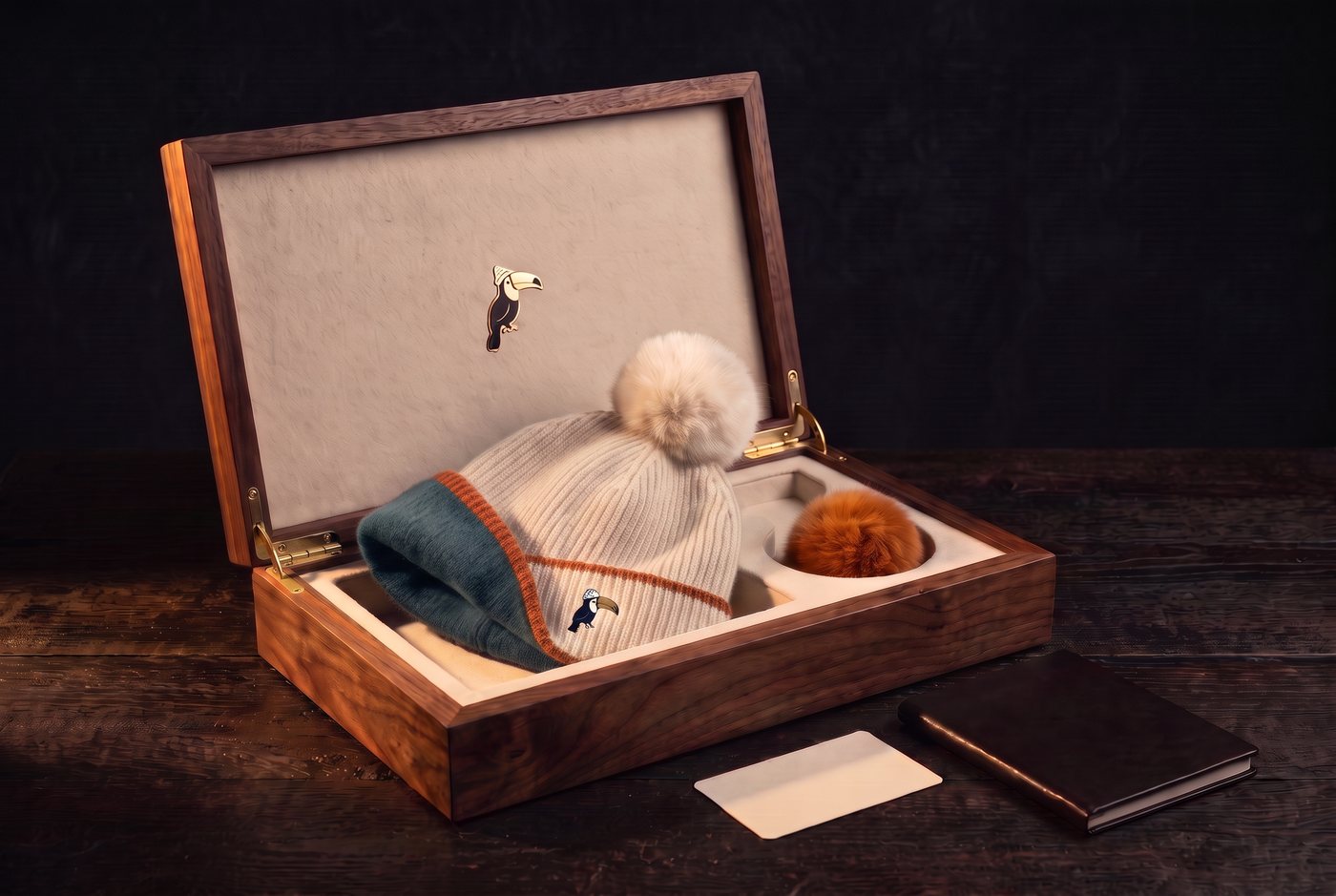
An open black walnut case lined in bone felt holding one chalk watch cap with a burnt-orange Edge and a chalk cashmere pom, its cuff turned to show a brushed petrol lining, a spare burnt-orange pom beside it.
The Rare BirdChalk cashmere, the Edge in Burnt Orange, a chalk pom, and a brushed petrol band inside. A spare pom travels with it, in its own place in the case.
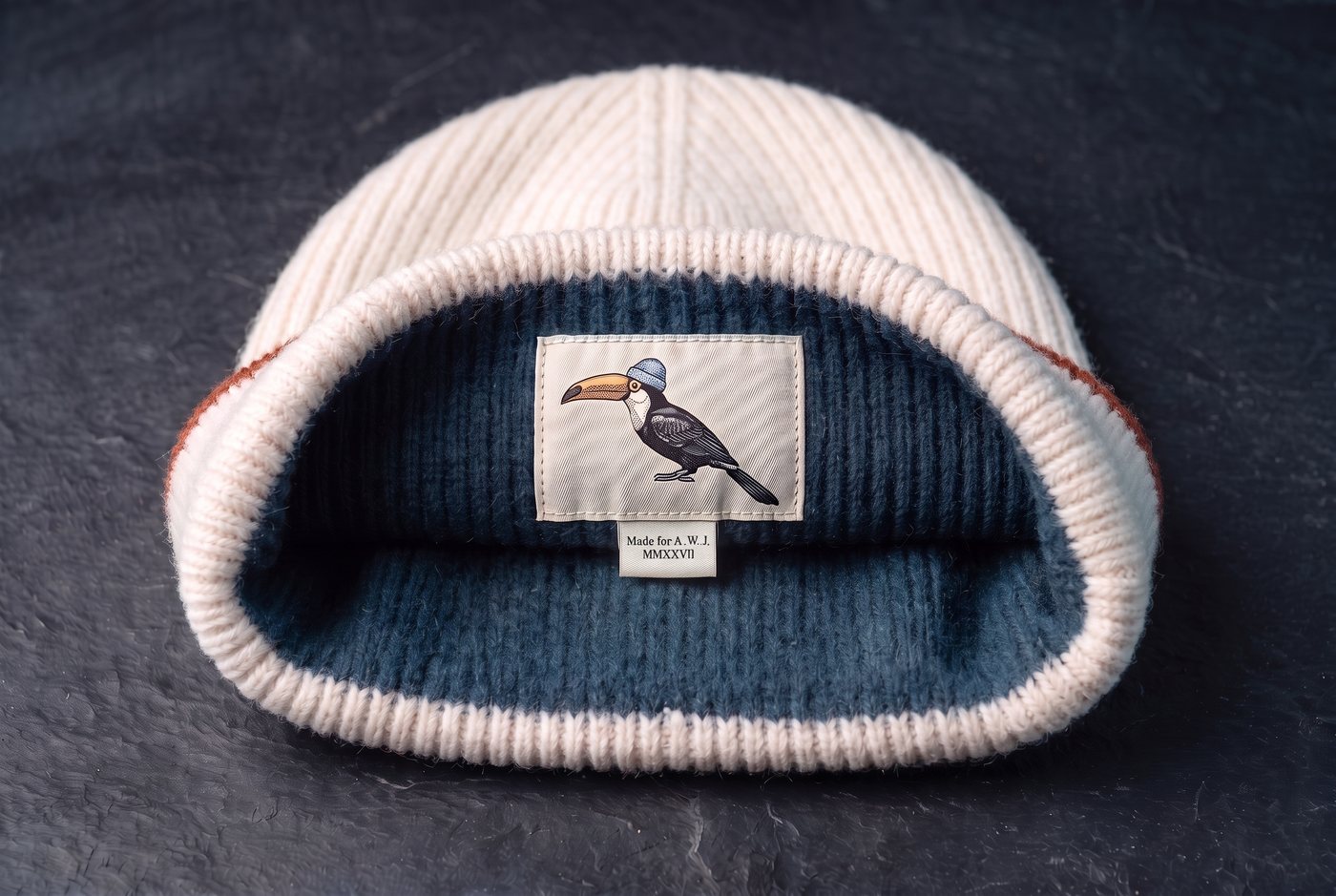
Looking down into a chalk Rare Bird: the inside of the cuff lined in brushed petrol cashmere, the small woven label with the toucan sewn on the lining, its tag reading Made for A. W. J., MMXXVII.
YoursInside, the same small label on a lining of brushed petrol cashmere, and the tag carries initials instead of a number. Made for A. W. J. Nobody sees it. Everybody feels it.
A couple walking away arm in arm down a snowy avenue of bare maples at dusk, one in a petrol hat and one in bordeaux.
The Pair, MontrealTwo hats, two colours, one number, on Mount Royal. Made for people who have been in the cold together for a long time.
A dark-haired woman in a camel coat and cream scarf smiling on a snowy Toronto street at blue hour, the Flatiron building and the towers behind her, wearing the petrol Watch.

Winter is not endured. It is dressed for.

Toronto

The Flock

Before anyone can buy, a list.

The Flock hears first: the date of the first Migration, one photograph of each Sighting ten days before anyone else, and the first 48 hours to claim a number. We write rarely. We never sell the list.

The two Sightings of the first winter are already photographed. The moment you join, you see them.

A question for the house? Write to us.

Write to us.

A question, a fitting, a hat for someone who has everything. We read every note and reply from the house.